


With the energy price cap rising 26% in January, Nano Pro-tech explains how the new government-backed Warm Homes Loan Scheme makes solar panels and battery storage more affordable than ever.
Energy bills are going up again. Ofgem has confirmed that the price cap will rise by 26% from 1 January 2027, adding around £443 a year to a typical household bill. For millions of families already feeling the pinch, it is unwelcome news heading into the coldest months of the year.
But there is some genuinely good news too. The government’s new Warm Homes Loan Scheme has just launched, offering low- and zero-interest loans for solar panels, home batteries and other clean energy upgrades — with nothing to pay upfront. For many households, the monthly repayment could be lower than the amount they save on their energy bill, meaning they could be saving from the very start.
At Nano Pro-tech, we are helping homeowners take advantage of the scheme to make renewable energy more affordable. In this guide, we explain exactly how it works, who can apply, how much you could save and what to check before you sign.
In This Guide We Answer:
- What is the Warm Homes Loan Scheme?
- Why does it matter now — and what does the price cap rise mean for you?
- Who can apply for a Warm Homes Loan?
- What can you use the loan for?
- How much cheaper is the borrowing?
- Could your repayments be lower than your energy savings?
- Why pair solar panels with a battery?
- How do you apply?
- Can you combine it with other support?
- What should you check before you sign?
1. What is the Warm Homes Loan Scheme?
The Warm Homes Loan Scheme is a new government-backed finance scheme that makes it cheaper to borrow money for solar panels, home batteries, heat pumps and other low-carbon home upgrades. It went live at the end of October 2026 and is the finance part of the government’s wider Warm Homes Plan — a £15 billion programme announced in January 2026, which aims to upgrade up to five million homes and triple the number of homes with rooftop solar by 2030.
The way it works is simple. The government does not lend you the money itself. Instead, it gives grant funding to approved, FCA-regulated lenders, and those lenders must pass that funding on to you in the form of a lower interest rate. The government says this lets lenders cut their rates by up to five percentage points compared with a regular bank or high-street loan — and some lenders are offering 0% interest on certain terms.
The key points at a glance
- Available UK-wide: England, Scotland, Wales and Northern Ireland.
- No upfront cost: the loan can cover the installation, with repayments spread over time.
- Low or zero interest: rates are set by each lender, but the scheme subsidy brings them down.
- Long terms available: some lenders offer up to 30 years to repay.
- MCS-certified installers only: your solar and battery system must be fitted by a certified installer.
| Nano Tip | This is a loan, not a grant — you repay what you borrow. The benefit is that borrowing costs far less than normal, so more of your energy savings stay in your pocket. |
2. Why does it matter now — and what does the price cap rise mean for you?
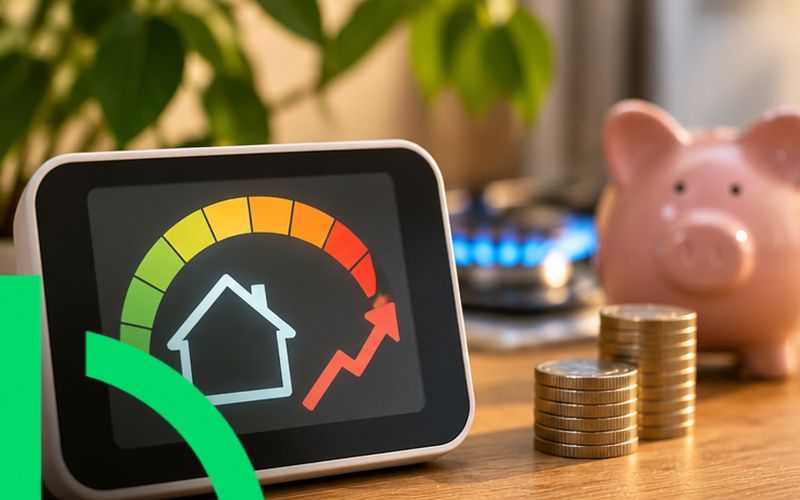
The timing could hardly be more important. On 25 November 2026, Ofgem confirmed that the energy price cap will rise by 26% from 1 January 2027. For a typical dual-fuel household paying by Direct Debit, that takes the annual figure from £1,723 to £2,166 — an increase of £443 a year, or roughly £37 more every month.
Ofgem says the rise is being driven by continued conflict in the Middle East, which has pushed international gas prices sharply higher. Gas bills under the new cap rise by 33% and electricity by 19%. Around 20 million households on standard variable tariffs will feel the increase straight away, while those on fixed deals are protected only until their fix ends.
Help with bills is welcome — but it is short-term
The government has confirmed that around 20 million households will receive £100 towards their energy bills from January. That is helpful, but it is a one-off. Generating and storing your own electricity tackles the problem at the root, reducing how much energy you need to buy from the grid at whatever price the market sets next.
| Nano Tip | The price cap is reviewed every three months, so bills can move again in April. Every unit of electricity your panels generate and your battery stores is a unit you are not buying at the new, higher rate. |
3. Who can apply for a Warm Homes Loan?
Eligibility is deliberately broad. The scheme is aimed at households who are able to pay, rather than a narrow group, so there is no scheme-wide income limit, benefits requirement or EPC test.
You can usually apply if you are:
- An owner-occupier — with or without a mortgage — anywhere in the UK
- A private landlord upgrading a rental property
The scheme does not cover:
- Tenants (although your landlord could apply)
- Social housing landlords
- Business borrowers
Every application is still subject to the lender’s normal credit and affordability checks. The government subsidy lowers the interest rate, but it does not guarantee approval or relax a lender’s usual lending criteria.
| Nano Tip | Many lenders offer a soft “eligibility check” that will not affect your credit score. Ask about this first before making a full application. |
4. What can you use the loan for?
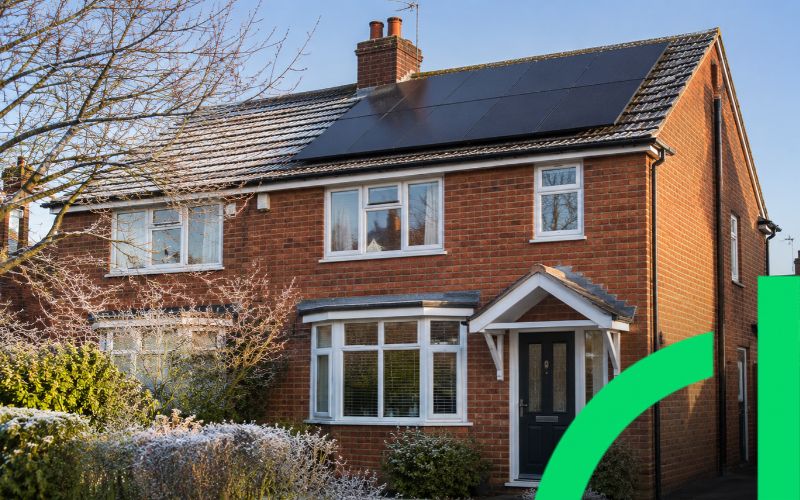
The scheme covers a range of low-carbon technologies, each with its own maximum loan amount. For Nano Pro-tech customers, the two that matter most are solar panels and home battery storage — and they have separate limits, so you can finance a complete system.
Maximum loan amounts set by the scheme
- Solar panels: up to £15,000
- Home battery storage: up to £15,000 (on its own or alongside solar)
- Air-to-water heat pump: up to £20,000
- Ground source heat pump: up to £35,000
- EV charger: eligible only when installed as part of a solar or battery system
These are the upper limits, not typical costs, and there is no scheme minimum — although individual lenders may set one. You can also choose to pay part of the cost upfront and borrow the rest. The right amount depends entirely on the size and specification of the system your home actually needs.
| Nano Tip | Thinking about an EV charger? Adding it to your solar and battery installation is the only way to include it in a Warm Homes Loan — it cannot be financed on its own. |
5. How much cheaper is the borrowing?
Each lender sets its own rates, but the government says the scheme reduces interest by up to five percentage points compared with standard loans. Some lenders are offering 0% on shorter terms, with low rates on longer ones.
The government’s own example
The Department for Energy Security and Net Zero gives this worked example: a homeowner borrowing £10,000 at 8% over seven years would repay around £155 a month on a loan available today. Through the Warm Homes Loan Scheme, they could save up to £285 a year on repayments alone.
Lower repayments do two things. They make the monthly cost easier to manage, and they mean more of the money you save on your energy bill is genuine saving rather than going to interest.
Longer terms, smaller repayments
With some lenders offering terms of up to 30 years, households can choose a longer term to keep monthly repayments down, or a shorter one to pay less overall. It is worth weighing both options, as a longer loan at a higher rate can cost more in total.
| Nano Tip | Always compare the total amount repayable, the loan length and any fees — not just the headline rate. The government itself recommends comparing on all three.. |
6. Could your repayments be lower than your energy savings?
This is where the scheme gets really interesting. Because the borrowing is so much cheaper, many households could find that their monthly loan repayment is smaller than the amount they save on their energy bill. In that case, the system effectively pays for itself as it goes — and in some cases homeowners are better off from the very first month.
What the government’s case studies show
- Tony, Bedfordshire: 18 solar panels and a battery. He was expected to be cost-neutral in his first year, with possible savings of more than £600 if predictions hold.
- Stuart, Stirling: a 10.8kWp solar array with an 11.52kWh battery. He estimates first-year savings of around £400 to £500 after costs.
- Beth, Birmingham: 14 solar panels and a battery, with projected savings of £1,050 a year.
The government also estimates that a combination of solar, battery and a heat pump could save families up to £550 a year on energy bills, with a further £300 a year possible on a time-of-use tariff.
Why the price cap rise strengthens the case
Every time energy prices go up, the value of the electricity you generate and store goes up with it — while a fixed-rate loan repayment stays the same. With the cap rising by 26% in January, the gap between what you save and what you repay could widen in your favour.
Results always depend on your home, your usage, your tariff and the loan terms you choose, so it is important to get a proper assessment rather than rely on averages.

| Nano Tip | Ask your installer to show your projected monthly savings alongside your monthly repayment. If the saving is bigger, you are ahead from day one. |
7. Why pair solar panels with a battery?
Solar panels generate most of their electricity during the middle of the day, when many households are out at work or school. Without storage, much of that free energy is exported to the grid. A home battery captures it so you can use it in the evening, when demand — and your usage — is at its highest.
The benefits of a combined system
- Use more of what you generate: stored solar power covers your evening usage instead of buying from the grid.
- Make the most of smart tariffs: charge your battery on cheaper overnight rates and avoid expensive peak times.
- Earn from your surplus: through the Smart Export Guarantee, energy suppliers pay you for electricity you export.
- Less exposure to price rises: the less you rely on the grid, the less the next price cap change affects you.
Because solar and batteries each have their own £15,000 limit under the scheme, you can finance a complete, properly sized system in one go rather than adding storage later.
| Nano Tip | Battery size should match your usage, not a generic package. A system that is too small leaves savings on the table; one that is too large costs more than it needs to. |
8. How do you apply?
You do not apply to the government directly. Applications go through a participating lender, and some installers can help arrange the finance as part of your quote. The government’s recommended route looks like this:
- Get advice and check grants: lower-income households in particular may qualify for free upgrades instead.
- Get a quote from an MCS-certified installer: a survey ensures the system is right for your roof, home and usage.
- Compare the finance options: look at the total repayable, loan length and any monthly fees.
- Apply to a participating lender: they will run credit and affordability checks.
- Keep your paperwork: your quote, finance agreement, invoice, proof of purchase and MCS certificate.
- Switch to a smart tariff: to get the most from your new system.
Not every lender works with every installer, so it is worth checking how your installer’s finance route works before you commit. Your installation may also be checked as part of a government audit, which is another reason to keep all records safe.
| Nano Tip | Start with a survey. A properly sized quote is the foundation of everything else — it tells you how much you actually need to borrow and what you can expect to save. |
9. Can you combine it with other support?
Yes, in many cases. The Warm Homes Loan sits alongside other parts of the government’s support, and some can be used together.
- 0% VAT: solar panels and battery storage installed in homes are currently zero-rated for VAT until 31 March 2027.
- Boiler Upgrade Scheme: if you are installing a heat pump, you can use the grant to reduce the upfront cost and a Warm Homes Loan for the rest.
- Home Energy Scotland: Scottish households can combine Home Energy Scotland support with a Warm Homes Loan.
- Warm Homes: Local Grant: lower-income households in England may be able to get upgrades for free instead of borrowing.
The one rule to remember is that you cannot use a Warm Homes Loan and another government scheme to pay for the same improvement. Each piece of funding must cover a different part of the work.
| Nano Tip | The 0% VAT relief on solar and batteries is due to end on 31 March 2027. Installing before then could make a real difference to the amount you need to borrow. |
10. What should you check before you sign?
The Warm Homes Loan Scheme is a genuinely positive step, but it is still borrowing, so it pays to go in with your eyes open.
Your checklist
- It is a loan, not a grant: you must repay everything you borrow, and missed payments can affect your credit file.
- Compare the whole package: a 0% loan on an overpriced system can cost more than a low-rate loan on a fairly priced one.
- Check whether the loan is secured: secured loans use your home as collateral, so understand the terms fully.
- Use an MCS-certified installer: it is a scheme requirement, and MCS installers must provide financial protection if work is faulty or the installer goes out of business.
- Understand the guarantee: the government reduces the interest rate but does not guarantee the loan or the installation.
Watch out for scams
New government schemes attract cold callers. Never pay upfront “deposits”, “admin fees” or “insurance” after unsolicited contact, and check any lender on the FCA register before applying.
| Nano Tip | Be wary of anyone who calls you out of the blue claiming to be “from the government”. The government does not cold call to sell Warm Homes Loans. |
Ready to Beat the Price Cap Rise?
Nano Pro-tech specialises in solar panel and battery storage systems designed around the way your household actually uses energy. With the Warm Homes Loan Scheme now open, there has never been a better time to start generating and storing your own power.
Every home is different, so the best first step is a survey and a tailored quote. We will size your system correctly, show you your projected savings alongside your repayments, and help you understand your finance options — with no obligation.
Frequently Asked Questions
Short on time? Here are the answers to the questions we are asked most about the Warm Homes Loan Scheme.
When did the Warm Homes Loan Scheme launch?
The government published its launch factsheet on 27 October 2026, with the first ten lenders already taking part. More lenders are expected to join.
Is the Warm Homes Loan interest-free?
Some loans are 0%, usually on shorter terms. Others carry low interest. Each lender sets its own rates.
Is there an income limit?
No. The scheme has no income threshold, but lenders will carry out their usual credit and affordability checks.
Can I get a loan for a battery on its own?
Yes. Battery storage is eligible whether it is installed alone or alongside solar panels.
Can tenants apply?
No, but private landlords can apply to upgrade their rental properties.
Do I have to use an MCS-certified installer?
Yes. Solar and battery installations under the scheme must be carried out by an MCS-certified installer.
How long can I spread the repayments over?
It depends on the lender. Some offer terms of up to 30 years.
Does the price cap rise affect me if I am on a fixed tariff?
Not until your fixed deal ends. After that, you would usually move to a variable tariff covered by the cap.
Will a Warm Homes Loan affect my credit score?
A full application may involve a credit search. Many lenders offer a soft eligibility check first, so ask before you apply.
How do I find out what my home could save?
Book a survey with an MCS-certified installer. They will assess your roof, usage and tariff to give you a realistic picture.
This article is for general information only and does not constitute financial advice. Warm Homes Loan eligibility, interest rates and terms are set by individual lenders and are subject to credit and affordability checks. Energy price cap figures are those announced by Ofgem on 25 November 2026 for 1 January to 31 March 2027 and apply to England, Scotland and Wales. Savings figures are government estimates and case studies; actual savings depend on your property, usage, tariff and system. Information correct at the time of writing, November 2026.