







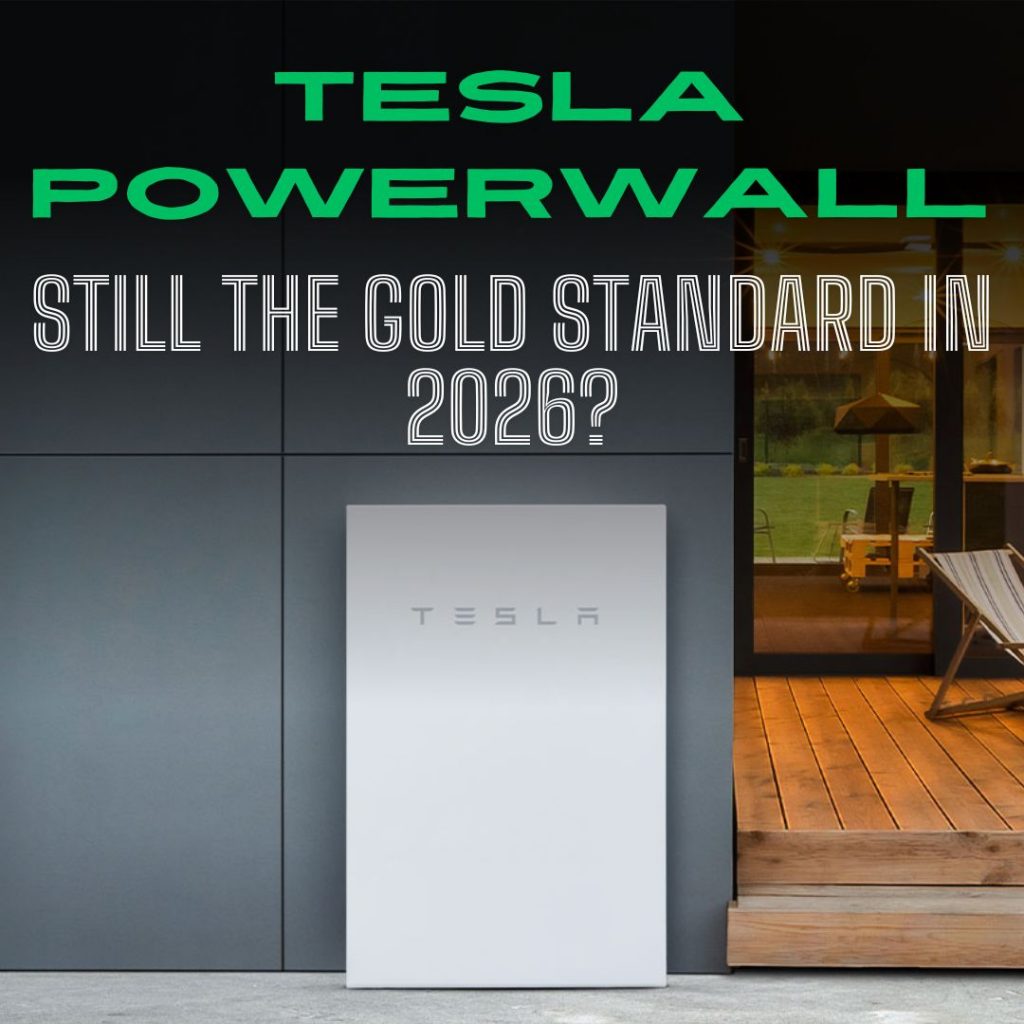
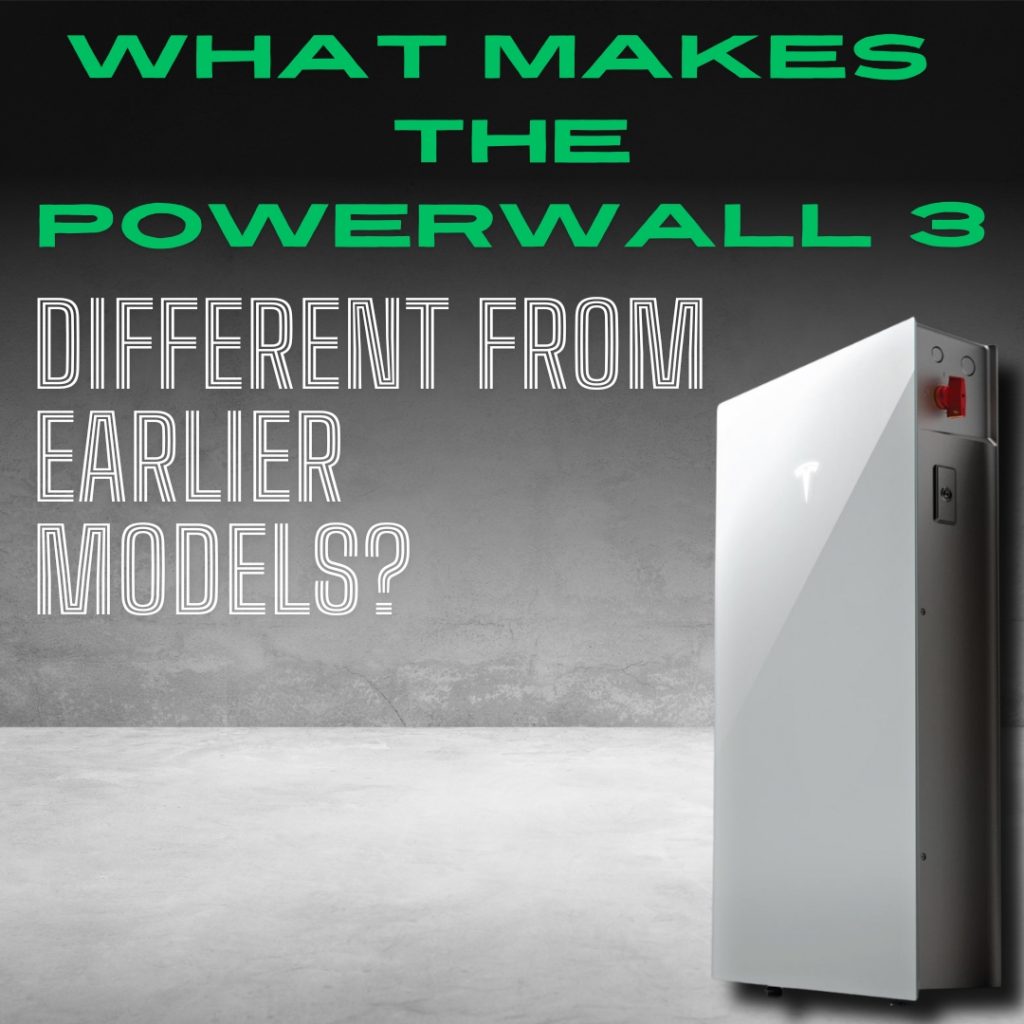
Nano Pro-Tech breaks down every significant upgrade in the Tesla Powerwall 3 — and helps you decide what it means for your home or business.
The Tesla Powerwall has been one of the most recognisable names in home battery storage since the original model launched in 2015. The Powerwall 2 — which followed in 2016 — became a genuine benchmark product: reliable, well-supported, and backed by a brand with the financial strength and engineering credibility to stand behind a 10-year warranty. Hundreds of thousands of Powerwall 2 units are still in active service across the UK.
The Powerwall 3 arrived in the UK in October 2024 and represents the most significant redesign in the Powerwall’s history. It is not a modest refresh. The integrated solar inverter, the doubled power output, the switch to lithium iron phosphate chemistry, and the jump to 97.5% round-trip efficiency are all substantial upgrades — not incremental improvements.
In this guide, Nano Pro-Tech — a premium certified Tesla Powerwall installer — walks you through every meaningful difference between the Powerwall 3 and its predecessors. Whether you are considering your first battery storage system, thinking about upgrading from a Powerwall 2, or simply trying to understand whether the Powerwall 3 is the right product for your home, this is the guide to start with.
In This Guide We Answer:
- Why Does the Powerwall 3 Represent Such a Significant Step Forward from the Powerwall 2?
- The Built-In Solar Inverter — What It Is, Why It Matters, and What It Changes About Installation
- Power Output: Why More Than Doubling from 5kW to 11.5kW Is a Bigger Deal Than It Sounds
- Battery Chemistry: What the Switch from NMC to Lithium Iron Phosphate Actually Means for You
- Round-Trip Efficiency: How the Powerwall 3’s 97.5% Rating Compares — and Why It Matters
- Physical Design and Installation: What’s Changed About How the Powerwall 3 Looks and Fits
- Scalability and Expansion: How the Powerwall 3 Grows with Your Energy Needs
- Backup Power and Blackout Protection: What a Powerwall 3 Can Actually Run During a Power Cut
- Is the Powerwall 3 Compatible with Existing Solar Systems — and Can It Work Alongside a Powerwall 2?
- Is the Powerwall 3 the Right Choice for Your Home — and Where Does Nano Pro-Tech Fit In?
1. Why Does the Powerwall 3 Represent Such a Significant Step Forward from the Powerwall 2?
Tesla launched the original Powerwall in 2015, and the Powerwall 2 — which became one of the best-selling home batteries in the world — followed in 2016. For nearly a decade, the Powerwall 2 set the benchmark for residential battery storage: sleek, reliable, well-supported, and backed by the kind of brand confidence that few competitors could match. Hundreds of thousands of units were installed across the UK and globally, and many of them are still performing well today.
The Powerwall 3 arrived in the UK in October 2024, and it is not simply an incremental update. It is a fundamental redesign of the system — one that addresses the most significant limitations of the Powerwall 2 and adds capabilities that simply were not available in the previous generation. The headline changes are striking: power output has more than doubled, a solar inverter is now built directly into the unit, battery chemistry has been upgraded to a more durable and sustainable formulation, and round-trip efficiency has risen from 90% to 97.5%.
The Powerwall 2 has now been discontinued in the UK. If you are considering a Tesla battery storage system today, the Powerwall 3 is the product — and understanding exactly what has changed, and why it matters, is the starting point for any informed purchase decision. Nano Pro-Tech, as a certified Tesla Powerwall installer, installs and supports the Powerwall 3 across the UK and has put together this guide to help you understand every significant upgrade.
| Nano Tip | The Powerwall 3 launched in the UK in October 2024 and has quickly established itself as one of the most capable residential battery systems on the market. As a premium certified Tesla installer, Nano Pro-Tech has access to genuine Powerwall 3 stock and can advise on availability and lead times for your area. Get in touch early — supply, whilst improving, can vary. |
2. The Built-In Solar Inverter — What It Is, Why It Matters, and What It Changes About Installation
The single most significant architectural change in the Powerwall 3 is the integration of a solar inverter directly into the unit. The Powerwall 2 was a battery only — it stored and released electricity, but it required a completely separate solar inverter to convert the DC electricity generated by your solar panels into AC electricity usable by your home. This meant a Powerwall 2 installation involved at least two wall-mounted units: the battery itself and a separate inverter box, often from a different manufacturer.
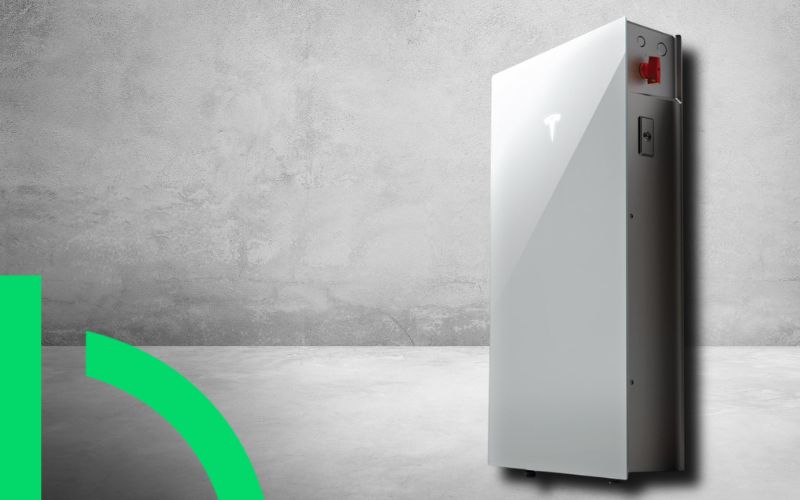
The Powerwall 3 changes this entirely. It is an all-in-one system: solar inverter, battery inverter, and battery storage integrated into a single, compact unit. Your solar panels connect directly into the Powerwall 3, which manages the entire energy flow — from solar generation through to storage, home consumption, and grid interaction — within one device.
Three MPPT Inputs for UK Roof Configurations
The UK version of the Powerwall 3 features three MPPT (Maximum Power Point Tracking) inputs, each rated at 6.6kW. MPPT inputs are the connections through which strings of solar panels connect to the inverter, and each input can independently optimise the output of the panels connected to it. This is particularly valuable in the UK context, where many properties have panels on roofs facing different directions — south and east, for example, or south, east, and west. With three independent MPPTs, the Powerwall 3 can handle up to three separate panel strings on different roof aspects without any one string dragging down the performance of the others.
What This Means for Installation Cost
The integrated inverter has a meaningful impact on the overall cost of a new solar and battery installation. With the Powerwall 2, customers needed to budget for the battery, a separate solar inverter (typically £800–£1,500 or more), and a Tesla Backup Gateway. With the Powerwall 3, the solar inverter is included within the unit — reducing the total number of components, simplifying the installation, and in many cases making the overall system cost comparable to or lower than a Powerwall 2 installation with equivalent capability.
DC Coupling for Maximum Efficiency
Because the solar panels connect directly into the Powerwall 3, the system uses DC coupling — the most efficient way to connect solar panels to battery storage. Electricity flows from the panels directly into the battery as DC, without the energy losses associated with converting to AC and back again. This contributes directly to the Powerwall 3’s impressive 97.5% round-trip efficiency figure.
| Nano Tip | If you are planning a new solar and battery installation, the Powerwall 3’s integrated inverter means you need fewer components on your wall and fewer warranties to manage. For most new installations, Nano Pro-Tech recommends the Powerwall 3 as the default system — it simplifies everything from the initial installation through to long-term monitoring and support. |
3. Power Output: Why More Than Doubling from 5kW to 11.5kW Is a Bigger Deal Than It Sounds
If there is one specification that captures the practical difference between the Powerwall 2 and the Powerwall 3 most vividly, it is continuous power output. The Powerwall 2 delivered 5kW of continuous power. The Powerwall 3 delivers 11.5kW — more than double, from a single unit. In the context of real-world home energy use, this difference is transformative.
To understand why, it helps to think about what continuous power output actually means. It is not how much energy the battery stores — both Powerwalls store 13.5kWh. It is how fast the battery can deliver that energy at any given moment. Think of it like the difference between a garden hose and a fire hose: the tank behind them might be the same size, but the rate at which water flows out is completely different.
What 5kW Could Not Handle — and What 11.5kW Can
The 5kW output of the Powerwall 2 was adequate for essential loads — lighting, a fridge, broadband, phone charging, and a television. But it struggled with high-draw appliances. A modern air source heat pump draws 3–5kW on its own. An EV charger on a standard 7kW home wallbox exceeds the Powerwall 2’s entire output capacity. Running an electric shower (8–10kW) was simply not possible. This meant that Powerwall 2 installations in backup mode required careful load management — deliberately limiting which circuits were backed up to avoid overloading the battery.
The Powerwall 3’s 11.5kW continuous output — with a peak output of 22kW for handling startup surges from motors and compressors — changes this picture dramatically. A single Powerwall 3 can comfortably run a heat pump and an EV charger simultaneously. It can handle the startup surge of an air conditioning compressor without shedding load. For most UK homes, a single Powerwall 3 provides whole-home backup capability without restrictions.
Peak Output and Motor Startup
The 22kW peak output is particularly relevant for appliances with electric motors — heat pumps, air conditioners, washing machines, and refrigerators all draw a significant surge of current when they start up, which can be two to three times their running draw. The Powerwall 2’s 10kW peak often struggled with these startup surges, sometimes causing appliances to trip or fail to start during a power cut. The Powerwall 3’s 22kW peak handles them comfortably.
| Nano Tip | When assessing whether a single Powerwall 3 is sufficient for your home, the most useful exercise is to add up the running wattage of everything you would want to operate simultaneously during a power cut. For most UK homes without electric heating, a single Powerwall 3 at 11.5kW continuous output is more than adequate. Nano Pro-Tech carries out this assessment as part of every installation design. |
4. Battery Chemistry: What the Switch from NMC to Lithium Iron Phosphate Actually Means for You
One of the less visible but genuinely important upgrades in the Powerwall 3 is the change in battery chemistry. The Powerwall 2 used NMC (Nickel Manganese Cobalt) lithium-ion cells — the same chemistry used in many electric vehicles and earlier consumer electronics. The Powerwall 3 uses LFP (Lithium Iron Phosphate) cells, a chemistry that has become the preferred choice for stationary energy storage in recent years.
The switch matters for several reasons, all of which affect the long-term performance and ownership experience of the product.
Longer Cycle Life
LFP cells are significantly more durable than NMC cells when it comes to repeated charge and discharge cycles. An LFP cell can typically withstand 4,000 to 6,000 full cycles before capacity drops meaningfully, compared to 1,500 to 2,500 cycles for NMC. At one full cycle per day — which is typical for a solar battery in daily use — that translates to 11 to 16 years of operational life for an LFP battery, versus 4 to 7 years for NMC. In practice, battery management systems limit depth of discharge to extend life further, but the underlying chemistry advantage of LFP is substantial.
Improved Thermal Stability and Safety
LFP chemistry is inherently more thermally stable than NMC. NMC cells can enter a condition called thermal runaway if they are overcharged, deeply discharged, or physically damaged — a process that generates significant heat and, in extreme cases, can lead to fire. LFP cells are far more resistant to thermal runaway, making them a safer choice for installation in domestic environments. This improved stability is one reason the Powerwall 3 uses a simpler air-cooling system rather than the liquid cooling system used in the Powerwall 2.
More Sustainable and Cobalt-Free
NMC batteries contain cobalt — a material with significant ethical and environmental concerns related to its mining, much of which takes place in the Democratic Republic of Congo under difficult conditions. LFP cells contain no cobalt, making them a more sustainable and ethically straightforward choice. For customers who care about the environmental credentials of their energy storage, this is a meaningful improvement.
| Nano Tip | The switch to LFP chemistry is one reason the Powerwall 3 is likely to outlast its 10-year warranty comfortably. LFP batteries in daily cycling use typically retain 80% or more of their capacity after 3,000 cycles — well beyond the warranty period for most installations. Nano Pro-Tech always discusses expected battery lifespan as part of the investment case for any battery installation. |
5. Round-Trip Efficiency: How the Powerwall 3’s 97.5% Rating Compares — and Why It Matters
Round-trip efficiency is a measure of how much of the electricity you put into a battery you actually get back out. No battery is 100% efficient — some energy is always lost as heat during the charging and discharging process. But the size of that loss varies significantly between products, and it has a direct bearing on how much financial value the battery delivers over its lifetime.
The Powerwall 2 had a round-trip efficiency of 90%. The Powerwall 3 achieves 97.5% — a meaningful improvement that compounds significantly over years of daily use.
What the Difference Means in Practice
Consider a battery that charges and discharges once per day at 10kWh per cycle. At 90% efficiency, 1kWh is lost per cycle — 365kWh per year. At 97.5% efficiency, just 0.25kWh is lost per cycle — 91kWh per year. That difference of 274kWh per year, at a grid electricity cost of 30p per kWh, represents approximately £82 in additional value delivered by the higher-efficiency system, every year, without any change in usage patterns. Over a 10-year ownership period, the efficiency improvement alone is worth around £820.
Why the Powerwall 3 Is More Efficient
The efficiency improvement comes primarily from the integrated DC-coupled design. In the Powerwall 2 system, solar electricity generated as DC was converted to AC by the solar inverter, then converted back to DC for storage in the battery, then converted to AC again for use in the home. Each conversion step loses a small amount of energy. The Powerwall 3 eliminates one of these conversion steps — solar DC flows directly into the battery without passing through an external inverter — reducing losses at every stage.
| Nano Tip | When comparing battery storage products, always ask for the round-trip efficiency figure — and be aware that some manufacturers quote different efficiency figures depending on conditions. The Powerwall 3’s 97.5% figure is one of the highest in the residential market and reflects the genuine engineering advantage of its integrated DC-coupled design. Nano Pro-Tech can provide a like-for-like efficiency comparison across the battery products they install.. |
6. Physical Design and Installation: What’s Changed About How the Powerwall 3 Looks and Fits
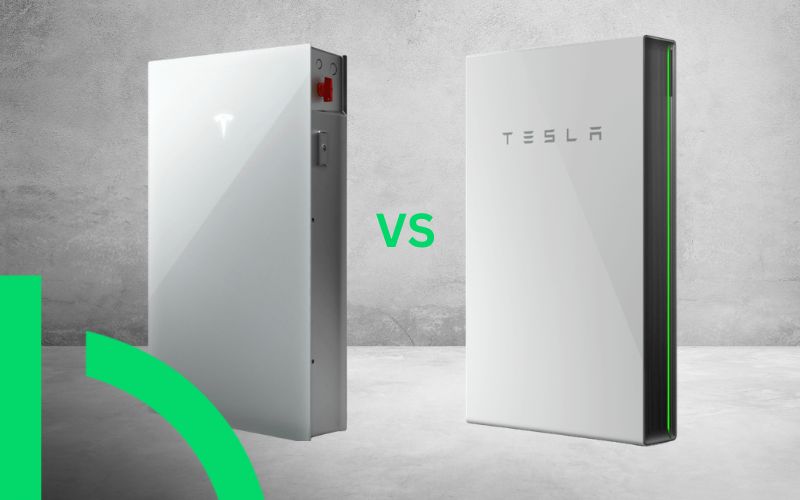
The Powerwall 3 maintains Tesla’s signature aesthetic — a clean, white, wall-mountable unit designed to sit unobtrusively in a garage, utility room, or on an exterior wall. But the physical specifications have changed from the Powerwall 2, and it is worth understanding the differences before you plan an installation.
The Powerwall 3 is slightly narrower and shorter than the Powerwall 2, but thicker from front to back — a result of accommodating the integrated solar inverter and the denser LFP cells within the same form factor. It is also heavier, weighing around 130kg compared to the Powerwall 2’s 114kg, which has implications for wall mounting. Both floor mounting and wall mounting are supported, but the heavier weight of the Powerwall 3 means the wall structure needs to be assessed carefully before a wall-mount installation.
Outdoor and Indoor Installation
The Powerwall 3 is rated IP67 for the battery and power electronics — meaning it is dust-tight and can withstand brief immersion in water. This makes it suitable for outdoor installation in the UK’s climate, which is a practical advantage for properties where indoor wall space is limited. The unit is designed to operate across a wide temperature range, from -20°C to +50°C, which more than covers the full range of UK weather conditions.
Cooling System Redesign
The Powerwall 2 used a liquid cooling system — effective but mechanically complex, with pumps and coolant circuits that could require maintenance over time. The Powerwall 3 uses an active air-cooling system with dual fans and an integrated air duct that draws air along the front and rear of the unit. This is simpler, lighter, and less likely to require intervention over the battery’s lifespan. The switch was made possible in part by the LFP chemistry’s superior thermal stability — LFP cells generate less heat and are more tolerant of temperature variation than NMC cells.
The Gateway: Still Required for Backup
Unlike some competitor all-in-one systems, the Powerwall 3 still requires a separate Tesla Backup Gateway 2 to enable full backup power functionality — the ability to seamlessly switch to battery power during a grid outage. The Gateway monitors grid status, detects outages, and manages the transition to backup mode. It is a separate wall-mounted unit, though smaller and less intrusive than the battery itself. For installations where backup power is not required — for example, a battery used purely for solar self-consumption and tariff optimisation — the Gateway can be omitted, reducing upfront cost.
| Nano Tip | Before your Nano Pro-Tech site survey, think about where you would like the Powerwall 3 to be located. A garage wall close to your consumer unit is often ideal — it minimises cable runs and keeps the installation tidy. If you are considering outdoor installation, make sure the location is sheltered from direct prolonged water exposure and accessible for any future servicing. |
7. Scalability and Expansion: How the Powerwall 3 Grows with Your Energy Needs
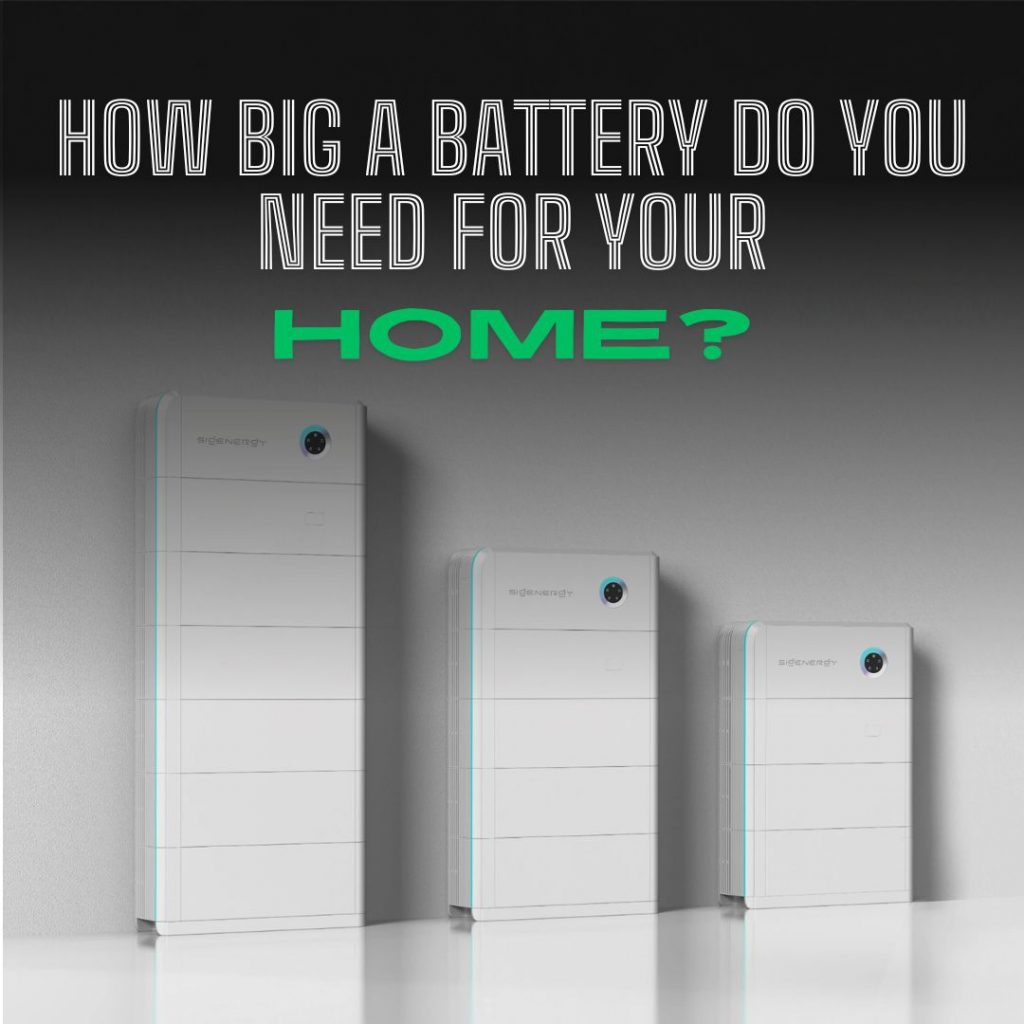
One of the most practically useful features of the Powerwall 3 system is its modular expandability. A single Powerwall 3 provides 13.5kWh of usable storage — sufficient for most UK homes to cover their evening and overnight electricity consumption from solar generation on a typical day. But for households with higher energy use, properties with electric vehicles and heat pumps, or businesses wanting greater energy resilience, additional capacity may be needed.
The Powerwall 3 addresses this through a system of DC Expansion packs — additional battery units that connect directly to the primary Powerwall 3 unit and add 13.5kWh of storage each, at a cost that is meaningfully lower per kWh than the primary unit, since they do not require their own inverter.

How Many Expansion Packs Can Be Added?
Each Powerwall 3 leader unit can support up to three DC Expansion packs, giving a maximum system capacity of 54kWh from a single Powerwall 3 and three expansions. The expansion packs are narrower than the primary unit and designed to stack neatly alongside it, minimising the wall space required. In the UK, DC Expansion packs are available for around £4,700 fully installed — making them a cost-effective way to increase storage capacity after the primary system is in place.
Future-Proofing Your Installation
The expandability of the Powerwall 3 system is particularly valuable given the direction of travel in UK home energy. Heat pumps, electric vehicles, and wider home electrification are all driving electricity consumption upwards. A household that is well-served by a single 13.5kWh Powerwall today may want significantly more storage capacity in three or four years as their energy needs evolve. Starting with a Powerwall 3 and adding expansion capacity when needed is a sensible way to manage upfront cost whilst retaining the flexibility to scale.
Powerwall 3 Cannot Be Mixed with Powerwall 2
It is important to note that Powerwall 3 units and expansion packs are not compatible with the Powerwall 2 system. You cannot add a Powerwall 3 to an existing Powerwall 2 installation, or vice versa. Customers with Powerwall 2 units who want to increase their storage capacity will need to do so by adding additional Powerwall 2 expansion units — though given that the Powerwall 2 has been discontinued, this may become less straightforward over time.
| Nano Tip | If you are planning to add an electric vehicle or a heat pump within the next few years, factor that into your battery sizing decision now. Nano Pro-Tech recommends specifying a system with room to grow — either by sizing with an expansion pack from the outset, or by confirming that your installation design supports a future expansion with minimal additional work. |
8. Backup Power and Blackout Protection: What a Powerwall 3 Can Actually Run During a Power Cut
For many customers, the ability to keep the lights on — and more — during a power cut is one of the most emotionally compelling reasons to invest in battery storage. The UK grid is generally reliable, but outages do occur, particularly during storms, and the anxiety of being without power has grown as more households have become dependent on electrically heated homes, electric vehicles, and internet-connected devices.
The Powerwall 3’s 11.5kW continuous output makes it one of the most capable whole-home backup batteries available in the UK residential market. To put that in context, the average UK home draws between 0.5kW and 3kW during normal use — well within the Powerwall 3’s capabilities — and even a home with a heat pump, an EV on charge, and all normal appliances running is unlikely to exceed 8–10kW simultaneously.
How Backup Mode Works
When the Powerwall 3 is installed with a Tesla Backup Gateway 2, it monitors the grid continuously. The moment an outage is detected, the Gateway disconnects the property from the grid and switches seamlessly to battery power — a process that typically takes less than a second and is imperceptible to most appliances. From the occupant’s perspective, the lights simply stay on.
During an outage, the Powerwall 3 powers the property from its stored energy. If solar panels are generating at the time of the outage, they continue to charge the battery, extending the duration of backup power. On a sunny day, a Powerwall 3 with solar panels can in principle maintain power indefinitely, as long as solar generation keeps pace with consumption.
How Long Will a Single Powerwall 3 Last?
Duration depends entirely on how much electricity the property is consuming. At a modest load of 500W — lights, fridge, broadband, and phone charging — a fully charged 13.5kWh Powerwall 3 would last around 27 hours. Add a heat pump running intermittently and the duration drops to perhaps 8–12 hours. Running an EV charger at the same time would reduce it further. For most UK households facing a typical overnight outage, a single Powerwall 3 is more than sufficient. For longer outages or higher-consumption properties, an expansion pack adds meaningful resilience.
Three-Phase Properties
One important limitation to be aware of: the Powerwall 3 can only provide backup power on a single phase. Most UK domestic properties are single-phase, so this is not an issue. However, for three-phase properties — more common in larger homes, some rural properties, and commercial premises — the Powerwall 3 will only back up the circuits connected to the phase it is wired to during an outage. Nano Pro-Tech assesses the phase configuration of every property as part of the site survey and will flag this if it is relevant to your installation.
| Nano Tip | If backup power during outages is a priority for you, make sure your installation quote explicitly includes the Tesla Backup Gateway 2 and is configured for whole-home backup. Some installations omit the Gateway to reduce upfront cost — which is fine for pure energy management purposes, but means you will not have backup power during an outage. Be clear with your installer about what you need. |
9. Is the Powerwall 3 Compatible with Existing Solar Systems — and Can It Work Alongside a Powerwall 2?
Compatibility is one of the most common questions Nano Pro-Tech receives from customers who already have solar panels or a Powerwall 2, and it is worth addressing clearly because the answer has changed with the Powerwall 3.
The Powerwall 3’s integrated solar inverter is designed primarily for new installations where the solar panels connect directly into the Powerwall. In this configuration — DC coupling — the Powerwall 3 is the only inverter in the system, handling both solar conversion and battery management in one unit.
Adding a Powerwall 3 to an Existing Solar System
If you already have solar panels with a working string inverter, adding a Powerwall 3 is possible but works differently. In this scenario, the Powerwall 3 connects to the AC side of your electrical system — after your existing inverter — rather than directly to the solar panels. This is called AC coupling, and it means you effectively have two inverters in the system: your existing solar inverter and the Powerwall 3’s built-in inverter.
AC coupling works reliably, but it does mean you do not benefit from the DC coupling efficiency advantage, and you are paying for an integrated inverter within the Powerwall 3 that is not being used for solar input. For some retrofit situations, this makes the Powerwall 3 a less cost-effective choice than alternative battery products designed specifically for AC-coupled retrofit installations. Nano Pro-Tech will always assess whether the Powerwall 3 is the best fit for a retrofit or whether an alternative battery would deliver better value.
Powerwall 3 and Powerwall 2 Cannot Be Combined
Tesla has confirmed that the Powerwall 3 cannot be added to an existing Powerwall 2 system, and a Powerwall 2 cannot be added to a Powerwall 3 system. The two generations use different architectures and are not interoperable. If you have a Powerwall 2 and want to increase your storage capacity, your options are to add another Powerwall 2 (whilst stock remains available from certified installers), or to consider a full system replacement with a Powerwall 3 — a more significant decision that may be justified if your existing Powerwall 2 is approaching the end of its warranty or if your energy needs have grown substantially.
| Nano Tip | If you have an existing solar system and are considering adding a Powerwall 3, book a site survey before making any assumptions about compatibility. The answer depends on the make, model, and age of your existing inverter, the configuration of your panels, and what you want the battery system to do. Nano Pro-Tech assesses all of these factors and will give you an honest recommendation — including whether an alternative battery product might be a better fit for your specific situation. |
10. Is the Powerwall 3 the Right Choice for Your Home — and Where Does Nano Pro-Tech Fit In?
The Tesla Powerwall 3 is, by almost any measure, one of the most capable residential battery storage systems available in the UK today. Its combination of integrated solar inverter, 11.5kW continuous power output, LFP battery chemistry, 97.5% round-trip efficiency, and expandable architecture puts it in a class of its own for new solar and battery installations and for high-demand properties that need a battery capable of running everything in the home.
But it is not the right choice for every situation. Its integrated inverter makes it most valuable — and most cost-effective — when installed as part of a new solar system, or as a replacement for an aging inverter and battery setup. For straightforward AC-coupled retrofits onto a recently installed solar system with a good working inverter, other battery products may offer better value. And for very price-sensitive customers, the premium nature of the Powerwall brand means there are cheaper options that still deliver solid performance.

When the Powerwall 3 Makes Compelling Sense
The Powerwall 3 is particularly well-suited to new solar and battery installations where an integrated system delivers the best efficiency and the simplest installation; properties with high electricity demand — heat pumps, EV charging, or large households — where the 11.5kW output matters; customers who want the confidence of a well-established brand with a global support network; and properties where future energy demand is likely to grow, making the expandability of the DC expansion system valuable.
What Nano Pro-Tech Brings to a Powerwall 3 Installation
As a premium certified Tesla Powerwall installer, Nano Pro-Tech brings more than just the ability to fit the hardware. Their team designs every installation from scratch — assessing your roof configuration, energy consumption, grid connection, and future plans to specify a system that will perform optimally for your specific property. They handle DNO notifications, MCS certification, and all associated paperwork as standard. And their post-installation support means you have an expert point of contact for the lifetime of the system, not just during the installation.
The Powerwall 3 is a significant investment, and getting the specification and installation right is as important as choosing the product. Nano Pro-Tech’s combination of Tesla certification, technical expertise, and commitment to honest, customer-first advice makes them the partner you want alongside you for every stage of the journey — from initial enquiry through to a system that is still performing well a decade from now.
| Nano Tip | The best way to find out whether the Powerwall 3 is right for your property is a no-obligation site survey with Nano Pro-Tech. Their team will assess your home, review your energy usage, and give you a clear, honest recommendation — including whether a Powerwall 3, an alternative battery, or a combination approach best suits your needs and budget. There is no pressure and no cost for the survey itself. |
Find Out If the Powerwall 3 Is Right for Your Home
Nano Pro-Tech is a certified Premium Tesla Powerwall installer with the expertise to design, supply, and install Powerwall 3 systems for homes and businesses across the UK. Every installation starts with a thorough site survey — assessing your energy usage, roof configuration, existing solar setup, and future plans — to specify the right system for your specific circumstances.
Get in touch with Nano Pro-Tech today for a no-obligation survey and proposal. Whether you are starting from scratch or looking to upgrade an existing system, their team will give you honest, expert advice — and a system that performs for years to come.
Frequently Asked Questions
Here are the questions Nano Pro-Tech hears most often from customers researching the Tesla Powerwall 3 — with clear, accurate answers.
Does the Powerwall 3 Still Need a Separate Gateway Unit?
Yes — if you want full backup power capability during a grid outage, the Powerwall 3 requires a separate Tesla Backup Gateway 2. The Gateway monitors the grid, detects outages, and manages the seamless switchover to battery power. However, for installations where backup power is not required — using the battery purely for solar self-consumption and tariff optimisation — the Gateway can be omitted, reducing the upfront system cost.
Is the Powerwall 2 Still Available to Buy and Install in the UK?
The Powerwall 2 has been discontinued by Tesla and is no longer available as a new product in the UK. The Powerwall 3 is now the only current Tesla Powerwall product. Some certified installers may still have limited Powerwall 2 stock, but availability is diminishing. If you are planning a new Tesla battery installation, the Powerwall 3 is the product to specify.
Can I Connect the Powerwall 3 to Solar Panels I Already Own?
Yes, but the connection method depends on your existing setup. If your existing solar panels and inverter are being replaced as part of the installation, the panels can connect directly into the Powerwall 3 via DC coupling. If you want to keep your existing inverter, the Powerwall 3 connects via AC coupling — which works reliably but does not benefit from the efficiency advantages of DC coupling. Nano Pro-Tech will assess your existing system and recommend the most appropriate approach.
How Many Powerwall 3 Units Can I Stack Together?
A single Powerwall 3 leader unit can support up to three DC Expansion packs, giving a maximum system capacity of 54kWh. Multiple Powerwall 3 leader units can also be installed together for even larger systems, though this is more common in commercial applications. For most UK homes, a single Powerwall 3 with one or two expansion packs provides ample storage capacity.
Does the Powerwall 3 Support Time-of-Use Tariff Optimisation?
Yes. The Powerwall 3 can be configured to charge from the grid during cheap overnight periods and discharge during expensive peak periods — a feature known as time-based control. This works particularly well with tariffs such as Octopus Go and Octopus Intelligent, which offer significantly cheaper overnight rates. The Tesla app allows you to set charging and discharging schedules to optimise for your specific tariff.
What Is the Warranty on the Powerwall 3?
The Powerwall 3 comes with a 10-year warranty, during which Tesla guarantees that the battery will retain at least 70% of its original capacity. The warranty covers unlimited charge and discharge cycles. Importantly, the full 10-year warranty requires the Powerwall to maintain a reliable internet connection — if connectivity is lost for an extended period, the warranty may revert to four years. Installation must be carried out by a certified Tesla installer to preserve warranty coverage.
How Loud Is the Powerwall 3 — Can It Be Installed Indoors?
How Loud Is the Powerwall 3 — Can It Be Installed Indoors?
The Powerwall 3 uses active air cooling with dual fans, which generate a modest amount of noise during operation — broadly comparable to a standard home appliance. It is suitable for indoor installation in a garage, utility room, or plant room, provided there is adequate ventilation. It is not recommended for installation in living spaces or bedrooms where the fan noise could be disruptive. Outdoor installation is also supported thanks to the IP67 weather rating.
Does the Powerwall 3 Qualify for Any UK Tax Relief or Incentives?
When the Powerwall 3 is installed at the same time as a new solar panel system, the entire installation — including the battery — may qualify for 0% VAT under current HMRC rules for energy storage installed with solar. Battery-only installations may attract 20% VAT. Tesla has also run periodic rebate schemes in the UK — including a scheme offering up to £750 off installations that ran into 2026. Nano Pro-Tech stays up to date with all available incentives and will confirm what applies at the time of your installation.
Can the Powerwall 3 Charge an Electric Vehicle During a Power Cut?
In principle, yes — the Powerwall 3’s 11.5kW continuous output is sufficient to run a standard 7kW home EV wallbox during a power cut. However, some EV chargers detect grid outages and stop charging as a safety measure. Whether EV charging is possible during an outage depends on your specific charger model and how it is configured. Nano Pro-Tech can advise on EV charger compatibility as part of your installation planning.
How Does the Powerwall 3 Compare to Competing Battery Products on the Market?
The Powerwall 3 sits at the premium end of the UK residential battery market. Its 11.5kW continuous output is significantly higher than most competitors, and its 97.5% round-trip efficiency is best-in-class. Key competitors include the GivEnergy All-in-One, the SolarEdge Home Battery, and the Sigenergy SigenStor — all capable products that may offer better value in specific situations, particularly for AC-coupled retrofits. Nano Pro-Tech installs multiple battery brands and will recommend the most appropriate product for your specific requirements — not simply the most expensive one.
Disclaimer: This article is intended for general informational purposes only. Tesla Powerwall product specifications, pricing, availability, warranty terms, and incentive schemes are subject to change. All figures quoted are based on information available at the time of writing and should be verified with a certified Tesla installer before making any purchase decision. Nano Pro-Tech accepts no liability for actions taken or not taken based on the contents of this article. Tesla and Powerwall are trademarks of Tesla, Inc.