











Nano Pro-Tech cuts through the confusion and explains everything you need to know about adding battery storage to an existing solar installation.
Hundreds of thousands of UK homes and businesses are sitting on solar panel systems that were installed without battery storage. At the time, the economics did not stack up, battery technology was less mature, and the Feed-in Tariff made exporting surplus electricity reasonably straightforward. But times have changed considerably. Energy prices have surged, battery costs have fallen, and the question Nano Pro-Tech now hears more than almost any other is: can I add a battery to my existing solar system?
The short answer is: almost certainly yes. But the longer answer — which is far more useful — depends on your existing equipment, the age and condition of your installation, and which approach to battery integration is most appropriate for your system. Getting these decisions right makes the difference between a battery retrofit that delivers excellent returns for fifteen years and one that underperforms or causes problems from the outset.
This guide from Nano Pro-Tech walks you through everything you need to know about retrofitting battery storage to an existing solar installation — from how the technology works and what your existing inverter can accommodate, to how to size a battery correctly and what the financial returns look like. Whether your solar system is two years old or twelve, this is the guide to start with.
In This Guide We Answer:
- Why Are So Many Existing Solar Owners Now Looking at Battery Storage?
- What Does “Retrofitting” a Battery Actually Mean — and How Does the Process Work?
- Does the Age of Your Solar System Affect Whether a Battery Can Be Added?
- What Role Does Your Existing Inverter Play — and Is It Compatible with Battery Storage?
- What Is a Hybrid Inverter — and Do You Need One to Add a Battery?
- Which Battery Technologies Are Available for Retrofit Installations — and How Do They Compare?
- How Do You Work Out the Right Battery Size for Your Existing Solar System?
- What Does the Retrofit Installation Process Involve — and How Disruptive Is It?
- What Are the Financial Returns on Adding a Battery to an Existing Solar System?
- How Do You Choose the Right Installer for a Solar Battery Retrofit?
1. Why Are So Many Existing Solar Owners Now Looking at Battery Storage?
Solar panels have been installed on UK homes and businesses in significant numbers since the Feed-in Tariff scheme launched in 2010. Many of those early adopters are now sitting on well-performing solar systems that have long since paid back their installation costs — but they are increasingly aware that they are only capturing a fraction of the value their panels could deliver.
The reason is straightforward. Without battery storage, a solar system can only use the electricity it generates at the precise moment it is produced. Any surplus — the electricity generated while the occupants are out at work, or during a particularly sunny afternoon when appliances are not running — is exported to the grid, typically at relatively low Smart Export Guarantee rates. Meanwhile, electricity is purchased from the grid in the evenings and at night at full retail price.
Battery storage changes that equation entirely. By capturing surplus solar generation and making it available when the sun is not shining, a battery dramatically increases the proportion of a home or business’s electricity consumption that is met by solar power. With energy prices remaining high and battery technology costs falling steadily, the financial case for retrofitting a battery has never been more compelling. Nano Pro-Tech sees demand for retrofit battery installations growing year on year — and this guide answers the question they are asked most often: can a battery actually be added to any existing solar system?
| Nano Tip | If your solar system was installed under the original Feed-in Tariff scheme, you will continue to receive your FiT payments after adding a battery — the two are entirely compatible. Adding a battery does not affect your FiT entitlement, provided the installation is carried out correctly by a qualified installer. |
2. What Does “Retrofitting” a Battery Actually Mean — and How Does the Process Work?
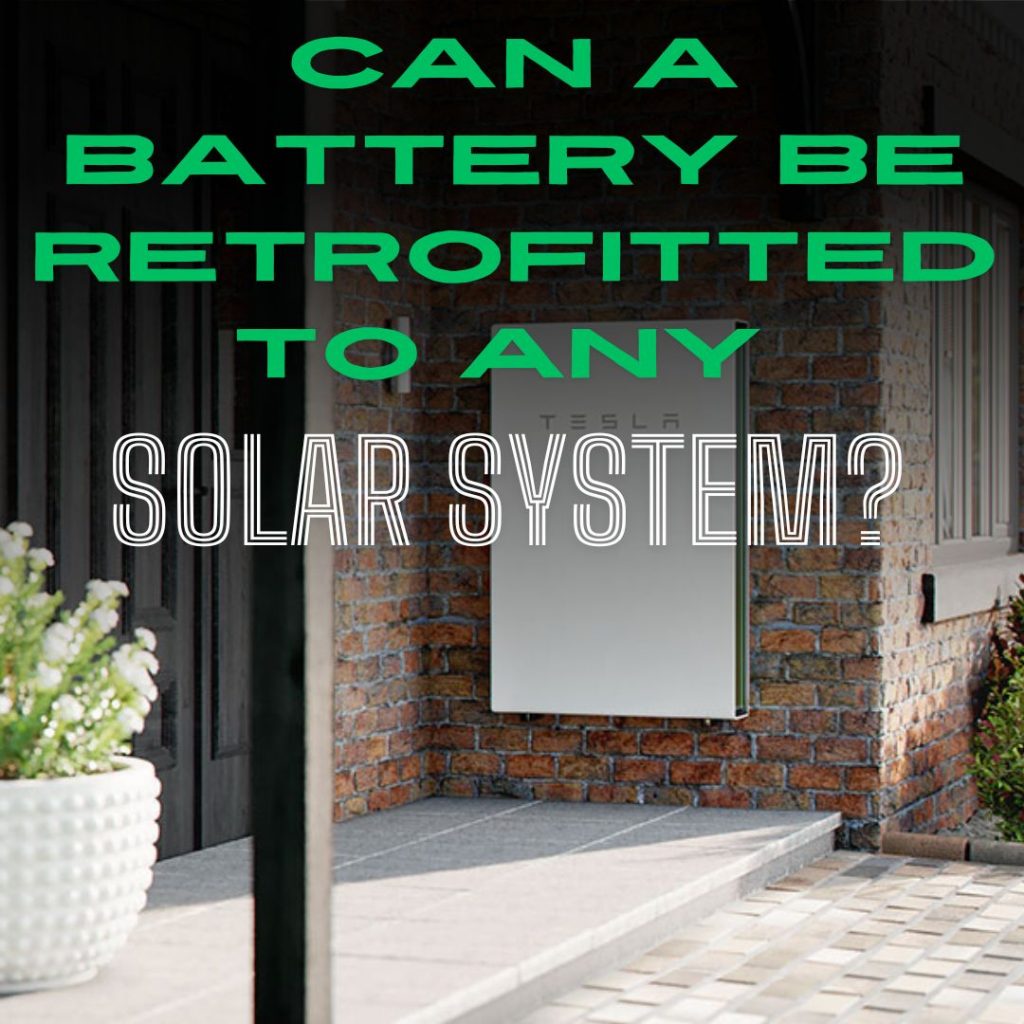
Retrofitting, in the context of solar battery storage, simply means adding a battery system to a solar installation that was originally built without one. The vast majority of solar panels installed in the UK before 2018 or so were installed without battery storage — partly because battery technology was less mature, partly because costs were considerably higher, and partly because the Feed-in Tariff scheme made exporting surplus electricity relatively straightforward.
A retrofit battery installation involves connecting a battery storage unit to your existing solar system so that surplus electricity from the panels charges the battery rather than being exported. Depending on your existing equipment — particularly your inverter — this connection can be made in several different ways, each with different implications for cost, complexity, and performance.
AC-Coupled Versus DC-Coupled Retrofits
The two main approaches to retrofit battery installation are AC coupling and DC coupling. In an AC-coupled system, the battery and its own inverter/charger connect to the AC side of the electrical system — after your existing solar inverter. The solar panels generate DC electricity, the existing inverter converts it to AC, and the battery system then converts some of that AC back to DC for storage. It is a slightly less efficient process, but it works with virtually any existing solar system regardless of inverter type.
In a DC-coupled system, the battery connects to the DC side of the system — between the solar panels and the inverter. This requires either a hybrid inverter (which replaces your existing inverter) or a specialist DC-coupled battery system. DC coupling is slightly more efficient because it avoids the AC-DC-AC conversion cycle, but it involves more disruption to the existing installation.
Which Approach Is Right for Your System?
The right approach depends on your existing equipment, the layout of your installation, and your budget. Nano Pro-Tech assesses every retrofit project individually, recommending the most appropriate coupling method based on what is already in place and what will deliver the best performance and value over the long term.
| Nano Tip | AC coupling is the most common retrofit approach in the UK because it is compatible with the widest range of existing solar systems and does not require replacing the existing inverter. For most homeowners with a functioning solar installation, AC coupling offers the simplest and most cost-effective route to battery storage. |
3. Does the Age of Your Solar System Affect Whether a Battery Can Be Added?
This is one of the most common concerns Nano Pro-Tech encounters from customers with older solar installations — and the good news is that age alone is rarely a barrier to adding battery storage. Solar panels themselves have very long operational lifespans, typically 25 to 30 years or more, and a system installed in 2010 or 2012 is likely still generating electricity effectively and will continue to do so for many years to come.
The more relevant question is not how old the system is, but what condition the existing components are in and whether they meet the technical requirements for battery integration. A well-maintained solar system of any age can, in the right circumstances, support a retrofit battery installation.
What an Older System Needs Before a Retrofit
Before a battery is added to an older solar system, a thorough assessment of the existing installation is essential. Nano Pro-Tech carries out a full system health check as part of every retrofit project, looking at the condition of the panels, the inverter, the wiring and DC isolators, the mounting system, and the generation meter. Any components that are degraded, non-compliant with current standards, or approaching end of life should be addressed before battery storage is added.
Inverter Age and Compatibility
The inverter is often the most age-sensitive component in an older solar system. Most solar inverters have an expected operational lifespan of 10 to 15 years. If your inverter is approaching or has exceeded this age, it may be worth replacing it as part of the retrofit project — either with a modern string inverter compatible with AC-coupled battery storage, or with a hybrid inverter that handles both solar and battery management in a single unit.
Generation Data and System Performance
It is also worth reviewing your system’s generation data before committing to a battery retrofit. If your panels are generating significantly less than their original predicted output — beyond the expected 0.5% annual degradation — there may be panel faults, shading issues, or inverter problems that should be investigated first. A battery added to an underperforming solar system will underperform too.
| Nano Tip | If you do not have easy access to your historical generation data, Nano Pro-Tech can retrieve it from your generation meter during the initial site visit. Comparing your actual lifetime output against the original predicted figure is the quickest way to establish whether your existing system is performing as it should before a battery is added. |
4. What Role Does Your Existing Inverter Play — and Is It Compatible with Battery Storage?
The inverter is the brain of any solar system. It converts the direct current (DC) electricity produced by the solar panels into the alternating current (AC) electricity used by your home or business appliances. In a standard solar-only installation, the inverter also manages the export of surplus electricity to the grid. When you add a battery, the inverter’s role becomes more complex — and whether your existing inverter can accommodate that complexity is one of the key questions in any retrofit assessment.
The most important distinction is between a standard solar inverter and a battery-compatible or hybrid inverter. Standard solar inverters — which is what the vast majority of pre-2018 installations will have — are designed purely to convert and export solar energy. They have no native capability to manage battery charging and discharging.
AC-Coupled Batteries and Standard Inverters
The good news for owners of standard solar inverters is that AC coupling allows a battery to be added without replacing the existing inverter. In an AC-coupled retrofit, the battery system has its own inverter/charger — a separate unit that connects to the AC side of your electrical system. The existing solar inverter continues to operate exactly as before, and the battery system operates independently alongside it.
This approach is compatible with virtually all standard string inverters from reputable manufacturers, regardless of age, provided the inverter is still functioning correctly. It is the reason that AC coupling has become the dominant retrofit approach in the UK market.

When Inverter Replacement Makes Sense
In some situations, replacing the existing inverter with a hybrid model is the better option — particularly if the existing inverter is old or showing signs of degradation, if the system layout is well-suited to DC coupling, or if the customer wants the simplicity of a single integrated system rather than two separate units. Nano Pro-Tech will always present both options where both are viable, along with the cost and performance implications of each.
| Nano Tip | Note down the make and model of your existing inverter before contacting an installer about a battery retrofit. This single piece of information allows Nano Pro-Tech to quickly assess the compatibility options available for your system and give you an accurate initial indication of the most suitable retrofit approach — saving time for everyone. |
5. What Is a Hybrid Inverter — and Do You Need One to Add a Battery?
A hybrid inverter is a single unit that combines the functions of a solar inverter and a battery inverter/charger. It manages the flow of electricity from your solar panels, to your home or business, to the battery, and to and from the grid — all within one integrated device. Hybrid inverters have become increasingly popular in new solar installations because they offer a cleaner, more integrated solution than separate solar and battery inverters.
The key question for existing solar owners is whether they need to install a hybrid inverter in order to add battery storage. The answer, in most cases, is no. As explained in the previous section, AC-coupled battery systems can be added to the vast majority of existing solar installations without replacing the existing inverter.
The Advantages of a Hybrid Inverter Retrofit
That said, there are genuine advantages to replacing an older inverter with a hybrid unit as part of a retrofit project. A hybrid inverter provides tighter integration between the solar and battery systems, often resulting in slightly higher overall efficiency. It also simplifies monitoring — you have a single system to track rather than two separate units — and it future-proofs the installation, making it easier to add additional battery capacity or expand the solar array later.
The Disadvantages of a Hybrid Inverter Retrofit
The main disadvantage is cost and disruption. Replacing a functioning inverter adds to the overall retrofit cost, and the installation work is more involved than a simple AC-coupled addition. If your existing inverter is relatively new and performing well, the additional cost of replacing it with a hybrid unit may not be justified by the efficiency and integration benefits.
Nano Pro-Tech’s Approach
Nano Pro-Tech takes a pragmatic, customer-first approach to this question. Where an existing inverter is functioning well and AC coupling is a viable option, they will typically recommend the AC-coupled route as the most cost-effective path to battery storage. Where an inverter is aging, underperforming, or where the system layout makes DC coupling clearly preferable, they will recommend a hybrid inverter replacement and explain the benefits in full.
| Nano Tip | If you are considering a hybrid inverter replacement as part of your retrofit, check the warranty position on your existing inverter first. Some manufacturers offer extended warranty packages that may still have value, and understanding the remaining warranty period can inform whether replacement now makes financial sense or whether waiting until the warranty expires is the better option. |
6. Which Battery Technologies Are Available for Retrofit Installations — and How Do They Compare?
The battery storage market has developed rapidly in the past five years, and there are now several mature battery technologies available for residential and commercial retrofit installations in the UK. Understanding the key differences between them helps you make an informed choice about which is most appropriate for your system and your usage patterns.
The dominant technology in the current UK market is lithium-ion — but within that category, there are important distinctions between different lithium-ion chemistries, each with its own performance profile, safety characteristics, and cost point.
Lithium Iron Phosphate (LFP)
Lithium iron phosphate batteries — often abbreviated as LFP or LiFePO4 — have emerged as the preferred chemistry for residential and light commercial battery storage in recent years. They offer an excellent combination of safety (they are inherently stable and do not overheat in the way that some other lithium chemistries can), long cycle life (typically 4,000 to 6,000 full charge-discharge cycles, equivalent to 10 to 15 years of daily use), and good performance across a wide range of temperatures. Most leading residential battery brands, including those recommended by Nano Pro-Tech, now use LFP chemistry.

Lithium Nickel Manganese Cobalt Oxide (NMC)
NMC batteries offer higher energy density than LFP — meaning they can store more energy in a smaller and lighter unit — but they have a shorter cycle life and are generally considered less thermally stable. They were more common in earlier residential battery products but have largely been superseded by LFP in the UK home storage market, though they remain prevalent in electric vehicle batteries where energy density is at a premium.
Lead Acid and Other Technologies
Lead acid batteries — the technology used in traditional off-grid solar systems — are rarely specified for modern retrofit installations due to their lower cycle life, lower usable capacity, larger physical footprint, and higher maintenance requirements. Flow batteries and other emerging technologies are available for larger commercial applications but are not yet cost-competitive for typical residential retrofit projects.
| Nano Tip | When comparing battery products, look beyond the headline storage capacity figure (in kWh) and check the usable capacity — the proportion of the total capacity that can actually be used in normal operation. Some batteries have a usable capacity of only 80–90% of their rated capacity. Nano Pro-Tech specifies batteries with high usable capacity ratios to ensure you get the storage performance you are paying for. |
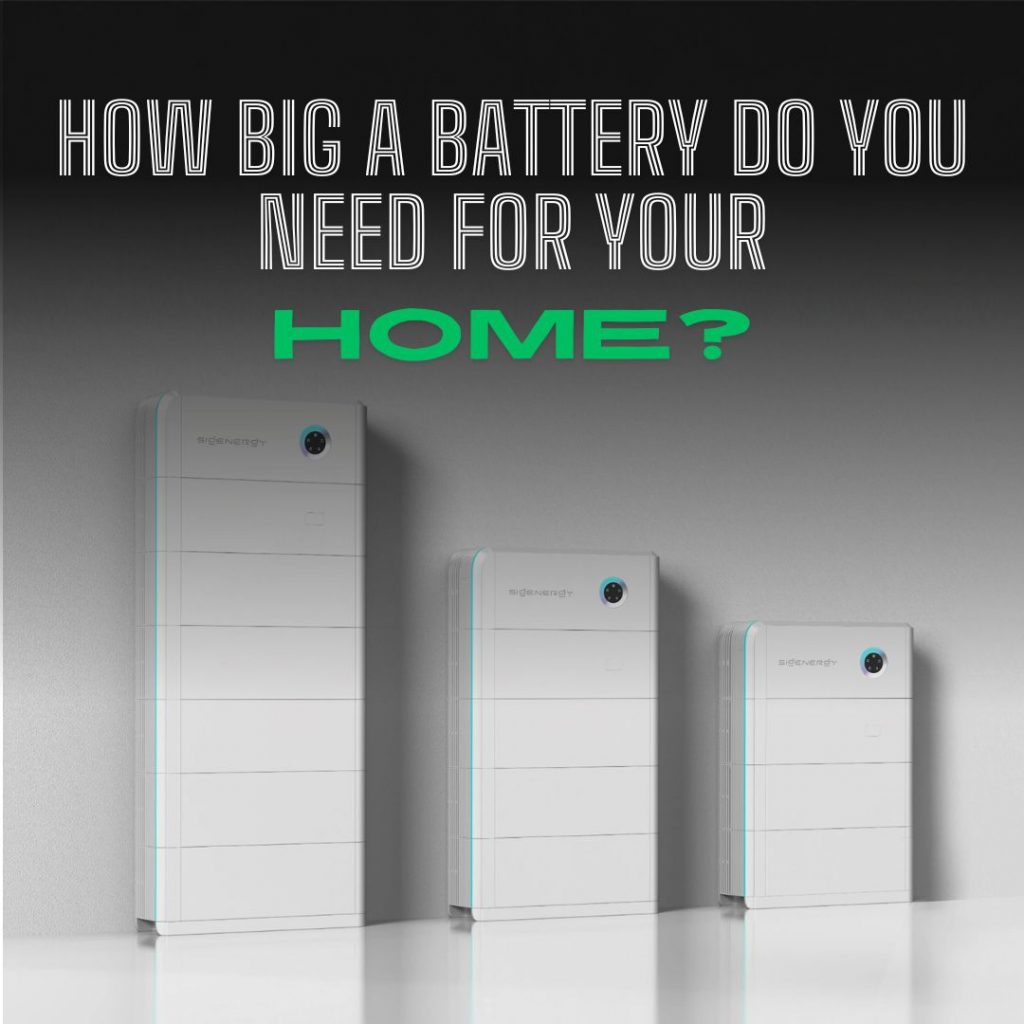
7. How Do You Work Out the Right Battery Size for Your Existing Solar System?
Battery sizing is one of the most important decisions in any retrofit project — and one of the areas where professional advice makes the most difference. An undersized battery fills up quickly and leaves surplus solar energy being exported unnecessarily. An oversized battery costs more than it needs to and may never reach full charge on shorter winter days, meaning a portion of the capacity is rarely used.
The right battery size depends on three main factors: the output of your existing solar panel system, your household or business energy consumption patterns, and what you primarily want the battery to achieve.
Matching Battery Capacity to Solar Output
As a starting point, the battery should be large enough to store a meaningful proportion of the surplus solar energy your system generates on a typical summer day — the period when surplus generation is greatest. For a 4kW domestic solar system generating around 16–20 kWh on a good summer day and consuming 8–10 kWh during daylight hours, a surplus of 6–10 kWh is typical. A battery in the 5–10 kWh range would capture most of that surplus.
Matching Battery Capacity to Evening and Night-Time Consumption
The battery also needs to be large enough to meet a useful proportion of your evening and overnight electricity consumption — the period when solar panels are not generating. The average UK household consumes around 1.5–2.5 kWh between sunset and midnight, and a similar amount overnight. A battery with 5–7 kWh of usable capacity can comfortably cover most of a typical household’s post-sunset consumption on a day when it has been fully charged.
The Role of Your Energy Usage Profile
Households and businesses with high daytime energy use — home workers, for example, or businesses operating during daylight hours — will extract more value from solar generation directly and may need a smaller battery to capture what remains. Properties where occupants are absent during the day will have more surplus solar to store and may benefit from a larger battery. Nano Pro-Tech analyses actual smart meter data and generation records where available to size the battery recommendation accurately for each customer.
| Nano Tip | Do not size a battery purely on the basis of summer surplus generation. Winter days are shorter and cloudier, meaning your battery may only receive a partial charge from solar on many days between October and February. A battery that is right-sized for year-round performance — not just peak summer output — will deliver better overall value and a higher self-sufficiency rate across the full year. |
8. What Does the Retrofit Installation Process Involve — and How Disruptive Is It?
One of the most common practical concerns about adding a battery to an existing solar system is the disruption involved. The good news is that a well-planned AC-coupled battery retrofit is typically a straightforward one-day installation — and in many cases, it can be completed with only a brief interruption to the home’s electricity supply.
The exact process varies depending on the battery system being installed, the existing electrical setup, and whether any remedial work on the existing solar installation is required. But for a standard AC-coupled retrofit on a domestic property, here is what the process typically looks like.
The Site Survey
Every Nano Pro-Tech retrofit begins with a site survey. The surveyor will inspect the existing solar installation, assess the condition of the panels, inverter, wiring, and electrical consumer unit, identify the best location for the battery unit, and check that the property’s electrical installation meets the requirements for battery storage. The survey also confirms the coupling approach and system design before any equipment is ordered.
The Installation Day
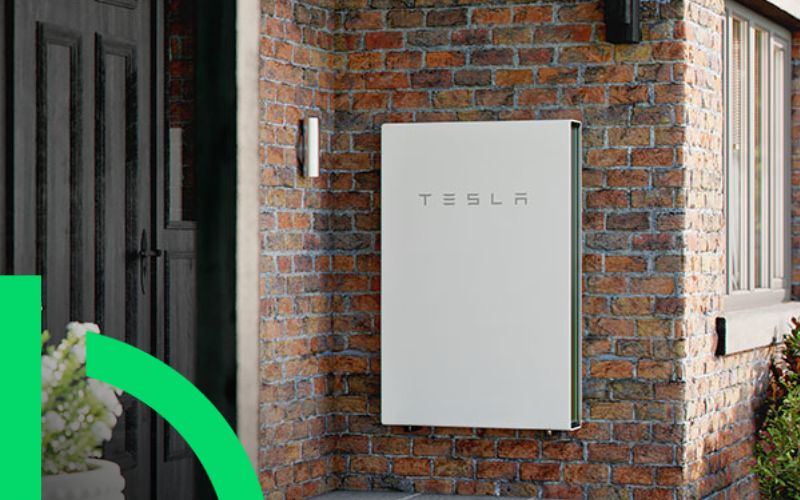
On installation day, the Nano Pro-Tech team will mount the battery unit — typically on a wall in a garage, utility room, or plant room — and make the necessary electrical connections to integrate it with the existing solar system and the property’s consumer unit. For an AC-coupled installation, the existing solar inverter is not touched, which keeps the work straightforward. The electricity supply will typically need to be isolated for a short period — usually one to two hours — while the connections are made safe.
Commissioning and Handover
Once the physical installation is complete, the system is commissioned — the battery management system is configured, the monitoring platform is set up, and the system is tested to confirm it is charging from solar and discharging as expected. Nano Pro-Tech provides a full handover, walking the customer through the monitoring app and explaining how to get the most from their new battery system. All relevant documentation, including the MCS certificate for the installation, is provided on completion.
| Nano Tip | Think carefully about where you want the battery to be located before the survey. Batteries need to be installed in a frost-free, well-ventilated indoor space — a garage, utility room, or cupboard under the stairs are common locations. Proximity to the existing inverter and consumer unit is also a factor. Nano Pro-Tech will advise on the optimal location during the survey, but having your preferences in mind in advance helps the process run smoothly. |
9. What Are the Financial Returns on Adding a Battery to an Existing Solar System?
The financial case for a retrofit battery has strengthened considerably in recent years, driven by persistently high electricity prices, falling battery costs, and the growing availability of time-of-use energy tariffs that reward households for shifting their consumption away from peak periods.
The core financial benefit of a battery retrofit is straightforward: instead of exporting surplus solar electricity to the grid at Smart Export Guarantee rates — typically 5–15p per kWh — you store it and use it yourself, displacing grid electricity that would otherwise cost 25–35p per kWh or more. Every unit of solar electricity you self-consume rather than export is worth two to five times as much as a unit you export.
A Worked Example
Consider a household with a 4kW solar system that currently self-consumes 40% of its generation and exports the remaining 60%. Annual generation is 3,800 kWh, meaning 1,520 kWh is self-consumed and 2,280 kWh is exported. At an export rate of 8p per kWh, the exported electricity earns £182 per year. Adding a battery that captures 1,500 kWh of that surplus and uses it to displace grid electricity at 30p per kWh generates an additional saving of £450 per year — more than doubling the financial return from the solar system.
Time-of-Use Tariffs
An increasingly valuable additional benefit comes from time-of-use electricity tariffs — tariffs such as Octopus Agile or Octopus Go that charge different rates for electricity at different times of day. With an intelligent battery management system, a retrofit battery can be programmed to charge from the grid during cheap overnight periods (sometimes as low as 5–7p per kWh) and discharge during expensive peak periods — generating savings entirely independently of solar generation.
Payback Period
Battery retrofit costs have fallen significantly and continue to do so. A quality domestic retrofit battery installation in the UK currently costs in the range of £3,000 to £7,000 depending on capacity and system complexity. At a saving of £400–£600 per year from increased solar self-consumption, and potentially more with time-of-use tariff optimisation, payback periods of six to ten years are achievable for many installations — with a battery lifespan of 10 to 15 years or more.
| Nano Tip | Nano Pro-Tech provides a detailed financial projection for every retrofit proposal, modelling the expected annual saving based on your current generation data, consumption profile, export rates, and grid tariff. This gives you a realistic, honest payback calculation — not a best-case scenario — so you can make a genuinely informed investment decision. |
10. How Do You Choose the Right Installer for a Solar Battery Retrofit?
The quality of a battery retrofit installation depends enormously on the expertise of the installer. Battery storage systems involve both high-voltage DC and AC electrical work, integration with existing solar equipment, and — in the case of systems with grid-charging capability — notification and compliance requirements with the Distribution Network Operator (DNO). This is not work that should be entrusted to a general electrician without specific battery storage experience.
There are several clear markers of a retrofit installer who knows what they are doing — and a few red flags that should prompt caution.
MCS Certification
MCS (Microgeneration Certification Scheme) certification is the UK’s recognised quality standard for small-scale renewable energy installations, including battery storage. An MCS-certified battery installer has met rigorous competency standards and uses MCS-approved methodology. MCS certification is also required for the installation to be eligible for any relevant government incentives, and the MCS certificate provides important consumer protection if problems arise.
Experience with Retrofit Specifically
Installing a battery as part of a new solar system is simpler than retrofitting one to an existing installation. Retrofit work requires a thorough understanding of different inverter makes and models, the ability to assess and remediate existing installations where necessary, and experience of both AC and DC coupling approaches. Ask any prospective installer how many retrofit projects they have completed and ask for examples of the battery systems they install most frequently.

Transparent Proposals and Honest Advice
A trustworthy retrofit installer will carry out a proper site survey before providing a quote — not offer a price based on a phone call or an online form. They will present options clearly, explain the pros and cons of different approaches, and provide a realistic financial projection based on your actual data. They will also be honest if your existing system needs remedial work before a battery can safely be added.
Nano Pro-Tech brings all of these qualities to every retrofit project. As an MCS-certified specialist in solar battery storage, their team has the technical expertise to handle installations of any complexity — and the commitment to honest, customer-first advice that makes the difference between a good investment and a disappointing one.
| Nano Tip | Before committing to any battery retrofit installer, ask to see their MCS certificate and check it is current on the MCS website. Also ask whether they will handle the DNO notification on your behalf — this is a regulatory requirement for battery systems above a certain size and is something a reputable installer should manage as a matter of course, not an afterthought. |
Ready to Get More from Your Solar System?
Nano Pro-Tech specialises in solar battery retrofit installations for homes and businesses across the UK. As an MCS-certified installer with extensive experience in both AC and DC coupled systems, their team has the expertise to assess your existing installation, recommend the right battery solution, and complete the installation to the highest standard.
Get in touch with Nano Pro-Tech today for a no-obligation site survey and retrofit proposal. Find out exactly how much more your solar system could be doing for you — and how quickly a battery could pay for itself.
Frequently Asked Questions
Here are the questions Nano Pro-Tech hears most often from existing solar owners considering a battery retrofit — with clear, practical answers.
Can I Add a Battery to a Solar System That Was Installed Over Ten Years Ago?
Yes, in most cases. Age alone is not a barrier to adding battery storage. What matters is the condition and compatibility of the existing components — particularly the inverter. Nano Pro-Tech carries out a full system health check before any retrofit, identifying any components that need attention and confirming that the existing installation can safely support battery storage. Many systems installed in 2010 to 2014 are perfectly suitable for a modern battery retrofit.
Will Adding a Battery Void the Warranty on My Existing Solar Panels or Inverter?
Adding a battery should not void the warranty on your solar panels, as the panels themselves are not modified. The position on your inverter warranty depends on the make and model and how the battery is connected. In an AC-coupled retrofit, the existing inverter is not modified, which typically preserves the warranty. Nano Pro-Tech checks the warranty position for your specific inverter before recommending an installation approach.
Can I Charge a Retrofit Battery from the Grid as Well as from My Solar Panels?
Yes. Most modern retrofit battery systems can be programmed to charge from the grid as well as from solar panels. This capability is particularly valuable if you are on a time-of-use electricity tariff, as it allows you to charge the battery during cheap overnight periods and discharge it during expensive daytime or evening periods. Nano Pro-Tech can configure your battery system to take advantage of your specific tariff structure.
How Long Do Solar Batteries Typically Last Before They Need Replacing?
Modern lithium iron phosphate (LFP) batteries — the chemistry recommended by Nano Pro-Tech for residential and commercial retrofit installations — typically have a rated cycle life of 4,000 to 6,000 full charge-discharge cycles. At one cycle per day, that equates to 11 to 16 years of operational life. Most manufacturers warrant their batteries to retain at least 70–80% of their original capacity over this period. Battery technology continues to improve, so replacement units available in ten years’ time are likely to be better and cheaper than today’s products.
Does a Retrofit Battery Qualify for Any Government Incentives or Grants?
Battery storage installed as a standalone retrofit (without new solar panels) is not currently eligible for the Smart Export Guarantee on its own, and there is no specific government grant scheme for domestic battery retrofit in Great Britain at the time of writing. However, battery storage installed alongside new solar panels may qualify in certain circumstances, and the landscape of incentives changes regularly. Nano Pro-Tech keeps up to date with all available schemes and will flag any relevant incentives at the time of your project.
What Happens to My Battery During a Power Cut — Will It Keep My Home Running?
This depends on whether your battery system has “islanding” or “blackout protection” capability — the ability to disconnect from the grid and power your home independently during an outage. Not all battery systems have this feature as standard. Systems with islanding capability can keep designated circuits — lights, sockets, key appliances — running during a power cut. Nano Pro-Tech can advise on which battery systems offer this capability and how to specify it correctly for your property.
How Much Does It Typically Cost to Retrofit a Battery to an Existing Solar System?
Retrofit battery installation costs in the UK currently range from approximately £3,000 to £7,000 for a typical domestic system, depending on the battery capacity, the brand and specification of the battery chosen, whether any remedial work on the existing installation is required, and whether an inverter replacement is needed. Commercial installations are priced according to capacity and complexity. Nano Pro-Tech provides detailed, transparent quotes following a full site survey.
Can I Add More Than One Battery to Increase My Storage Capacity?
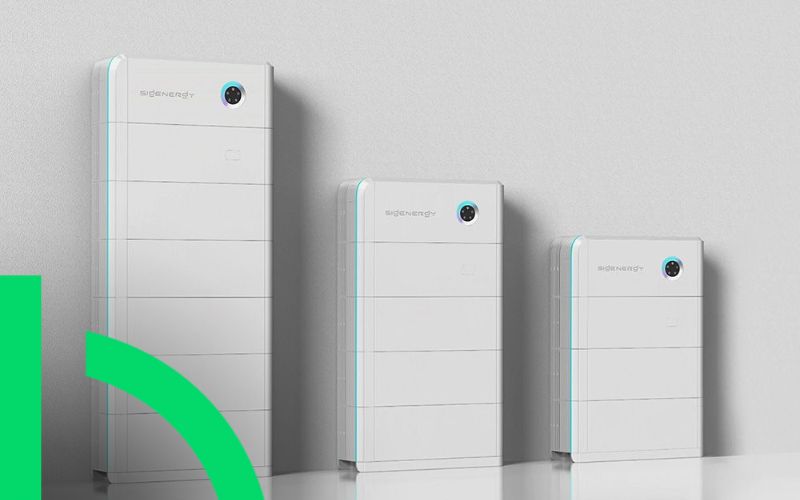
Yes. Many battery systems are designed to be modular — additional battery units can be added to increase total storage capacity, either at the time of the original retrofit or at a later stage. This is worth considering when choosing your battery system: opting for a modular product from the outset gives you the flexibility to expand storage as your needs change or as battery costs continue to fall. Nano Pro-Tech can advise on which products offer the best scalability for your situation.
Will a Retrofit Battery Affect My Smart Export Guarantee Payments?
Adding a battery does not automatically affect your Smart Export Guarantee (SEG) payments, but it will change the pattern of your exports. Because more of your solar generation is self-consumed via the battery, the volume of electricity you export to the grid will fall — and therefore your SEG payments will reduce. This is not a loss, however; the value of the solar electricity used via the battery (displacing grid electricity at full retail price) is typically two to four times the export rate you would have received for the same units.
Do I Need to Inform My Energy Supplier or Network Operator When I Add a Battery?
Yes. Battery storage systems above a certain capacity (4kW for most single-phase domestic properties) require notification to your Distribution Network Operator (DNO) before installation. For systems above certain thresholds, formal approval is required. Your energy supplier should also be notified of any change to your generation setup. Nano Pro-Tech handles all necessary DNO notifications and approvals on behalf of their customers as a standard part of the installation process.